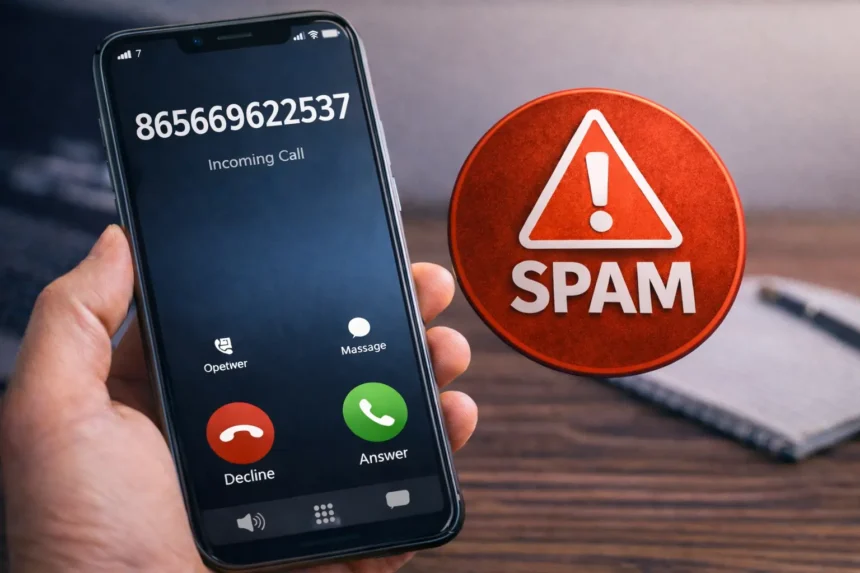
The number 8656696225537 is widely reported by users as a scam related contact that has been linked to harassment calls, impersonation attempts, and fraudulent requests for personal information.
Many recipients describe pressure tactics and fake authority claims designed to trigger panic or urgency. Understanding how this number is used, what warning signs to watch for, and how to respond can significantly reduce your risk of financial loss or identity theft.
What Is 8656696225537?
This 8656696225537 number is commonly flagged across community reporting platforms as a suspicious caller associated with scam behavior. Reports describe repeated unsolicited calls, impersonation schemes, and attempts to extract sensitive personal or financial information.
The number appears to be structured like a United States phone number connected to area code 865, which serves parts of Tennessee, including the Knoxville region. However, scammers often use spoofing technology that makes a call appear local even when it originates elsewhere.
How the Scam Works?
Calls associated with this number typically follow recognizable scam patterns. The caller may impersonate law enforcement, a bank representative, or a government official. Their goal is to establish authority quickly and pressure the recipient into compliance.
Common tactics include:
• Claiming unpaid fines or legal trouble
• Warning about frozen bank accounts
• Urging immediate payment to avoid penalties
• Requesting identity verification details
Reported Scam Types Associated with This Number
User reports show several recurring scam categories linked to this caller pattern:
Fake legal threats
Callers claim to represent law enforcement or legal offices, alleging warrants or penalties.
Bank impersonation
Victims report callers pretending to represent financial institutions to collect account credentials.
Warranty or loan schemes
Robocalls offering fake services or financial approvals are another frequent complaint.
Harassment and phishing
Repeated calls requesting personal data or attempting social engineering are common.
These scam types are designed to exploit trust, confusion, or fear. None of these legitimate institutions demands sensitive information over unsolicited phone calls.
Read Also: 8885157396 – Who Is Calling From This Number?
Warning Signs of Scam Calls
Recognizing scam indicators is one of the strongest defenses against fraud. Warning signs include:
• Unexpected calls claiming urgent legal or financial issues
• Threatening language or pressure to act immediately
• Requests for passwords or account details
• Caller ID inconsistencies
• Offers that sound unrealistic
Spoofing technology allows scammers to disguise their true numbers, making calls appear local. This tactic increases the likelihood that a recipient will answer.
What to Do If You Receive a Call
If you receive a suspicious call associated with this number, the safest response is to disengage immediately.
Recommended actions:
• Do not provide personal or financial information
• Avoid continuing the conversation
• Hang up without arguing
• Record the time and nature of the call
• Report the incident through official channels
Responding emotionally or attempting to challenge the caller often prolongs the interaction and increases risk.
How to Block and Report the Number
Blocking prevents repeat contact and helps reduce harassment.
On most smartphones:
iOS devices allow blocking through the recent calls menu.
Android devices offer blocking through call history settings.
Reporting options include:
• Federal Trade Commission complaint system
• Federal Communications Commission reporting portal
• Carrier spam reporting tools
• Community caller identification platforms
Reporting contributes to broader fraud tracking efforts and helps authorities identify scam networks.
Protecting Yourself from Future Scam Calls
Preventive measures reduce exposure to similar threats:
• Enable built in spam filtering features
• Use reputable caller identification apps
• Register with do not call databases
• Review privacy settings on online accounts
• Avoid sharing phone numbers unnecessarily
Monitoring financial statements and credit reports regularly can help detect suspicious activity early.
What to Do If You Already Shared Information
If sensitive information has been exposed, immediate action is critical.
Steps to take:
• Contact your bank or credit provider immediately
• Freeze or monitor credit files
• Change passwords for affected accounts
• File official fraud reports
• Keep records of all communications
Quick intervention can limit financial damage and prevent identity misuse.
Verification Tools and Resources
Several tools can help verify unknown callers:
• Reverse lookup databases
• Caller identification apps
• Community reporting platforms
• Official government complaint portals
These resources allow users to cross reference suspicious numbers before engaging with the caller.
Read Also: 4123879299 – Who Is Calling From This Number?
Legal and Regulatory Framework
Consumer protections exist to combat phone fraud. Regulations prohibit deceptive robocalls and unauthorized spoofing.
Key protections include:
• Consumer rights against unsolicited calls
• Enforcement actions against fraud networks
• Reporting mechanisms for victims
While laws continue to evolve, public awareness remains a crucial defense layer.
FAQs About 8656696225537
Is this 8656696225537 number legitimate?
No credible evidence supports it as a trusted caller. Reports strongly indicate scam behavior.
Why am I receiving these calls?
Scammers use automated dialing systems targeting large pools of numbers.
Can answering cost money?
Simply answering does not typically create charges, but engaging may expose personal data.
How do scammers get phone numbers?
Data leaks, online registrations, and purchased contact lists are common sources.
Will blocking stop all scam calls?
Blocking helps but scammers frequently rotate numbers.
Is the area code itself suspicious?
No. The code is legitimate, but scammers exploit it through spoofing.
How can I verify a real authority call?
Contact the organization directly using official contact information.
Conclusion of 8656696225537
Scam calls remain a persistent threat, and awareness is the most effective defense. Recognizing deceptive tactics, refusing to share personal data, and reporting suspicious activity all contribute to stronger personal security. Staying informed allows you to act quickly and confidently when encountering questionable calls.