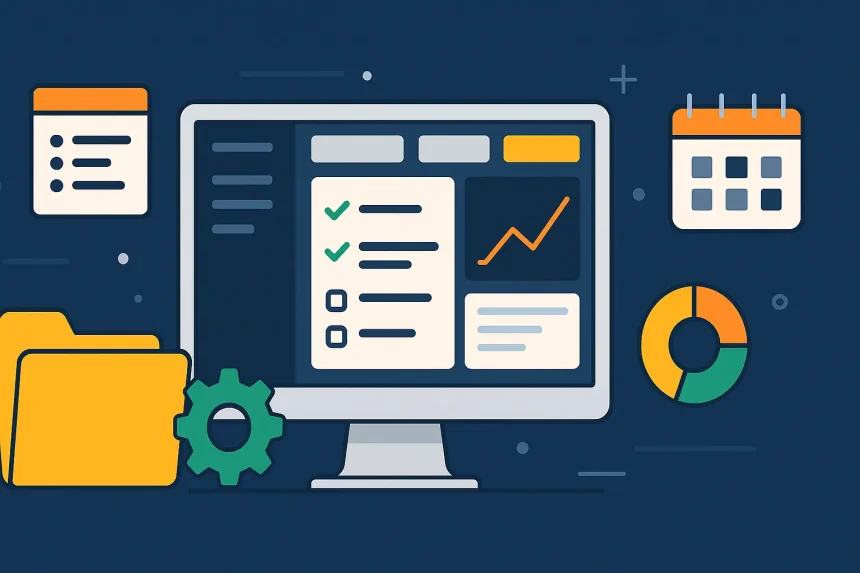
Develop oxzep7 software is commonly used online as a general term for creating a modern, modular productivity platform. It does not describe one fixed product. Instead, it refers to a class of web-based systems designed to automate workflows, manage business data, and scale across teams and organizations.
In practical terms, developing oxzep7 software means designing and building a flexible digital backbone for tasks, projects, approvals, reporting, and internal operations. These platforms are often customized for specific teams or industries but share the same core goals: scalability, security, automation, and a strong user experience.
Rather than a simple to-do app, oxzep7-style software functions as a central system of work, integrating people, processes, and data into one coherent platform.
Clarifying Vision and Use Cases Before Coding
Before writing a single line of code, successful teams clearly define why they want to develop oxzep7 software.
Target Users
Oxzep7-style platforms typically serve:
- Operations and process teams
- Sales and customer success teams
- Support and service desks
- HR and people operations
- Engineering and product teams
- Freelancers or small business owners
Each group has different workflows, but all benefit from structured automation and shared visibility.
Core Pain Points
Common problems that drive oxzep7 development include:
- Manual data entry across multiple tools
- Approval chains hidden in emails
- Disconnected spreadsheets and dashboards
- Delayed reporting and poor visibility
- No single source of truth
Desired Outcomes
These pain points should translate into measurable goals:
- Faster and more reliable workflows
- Fewer human errors
- Clear accountability
- Real-time operational visibility
- Improved productivity across teams
A clear vision ensures the platform solves real problems instead of becoming another unused tool.
High-Level Architecture for an Oxzep7 Platform
A strong oxzep7 platform relies on a modular, service-oriented architecture.
Core Architectural Components
- Backend services
APIs, authentication, business logic, and the automation engine. - Frontend web application
Dashboards, task views, reports, admin settings, and configurations. - Background workers
Scheduled jobs, automation execution, notifications, and integrations.
Architectural Principles
- Loose coupling between services
- Clear responsibilities per module
- API-first design
- Independent scaling and deployment
This approach allows teams to add new features, integrations, or workflows without rewriting the entire system.
Read Also: Moxhit4.6.1 Software Testing: Concept, Features, and QA Best Practices
Choosing the Tech Stack (Backend, Frontend, Data)
When you develop oxzep7 software, using a reliable and mainstream stack reduces long-term risk.
Backend
Popular and proven options include:
- Node.js with Express or NestJS
- Python with FastAPI or Django
These frameworks support rapid API development, strong typing options, and mature ecosystems.
Frontend
Modern UI frameworks are essential:
- React
- Vue
- Angular
They support component-based design, complex dashboards, and modular growth as the platform evolves.
Databases and Caching
- PostgreSQL or MySQL for structured business data
- Redis for caching, job queues, and rate limiting
Infrastructure
- Docker for containerization
- Kubernetes or managed container services
- Cloud providers such as AWS, GCP, or Azure for scaling and resilience
This stack balances performance, flexibility, and hiring availability.
Data Modeling and Domain Design
Clean data modeling is critical when developing oxzep7 software.
Core Domain Entities
- Users
- Teams
- Projects
- Tasks or Items
- Workflows and Rules
- Integrations
- Events and Logs
Relationship Design
- A project contains many tasks
- A user belongs to multiple teams
- Tasks connect to comments, files, rules, and logs
Data Safety and History
Best practices include:
- Soft deletes instead of hard deletes
- Versioning for key records
- Full audit trails showing who changed what and when
- Strong relational constraints
These foundations enable reporting, debugging, and compliance requirements later.
Read Also: S-40533E1(EXW): Meaning, Use Cases, and Practical Insights
Building Core Productivity Features First
Avoid feature overload early. Focus on essential capabilities.
Task and Item Management
- Create and assign tasks
- Priorities, tags, and filters
- Multiple views such as lists, boards, or calendars
- Fast global search
Automation Engine
Automation defines oxzep7 platforms:
- Trigger → Condition → Action model
- Background workers handle execution
- Support for time-based and event-based rules
Collaboration Tools
- Comments and mentions
- Activity timelines
- Notifications via email and in-app channels
Analytics and Reporting
- Dashboards showing throughput and cycle time
- Bottleneck identification
- Charts using reliable libraries such as Recharts or ECharts
These features deliver immediate business value.
Security, Authentication, and Access Control
Security must be built in from day one.
Authentication
- Secure email and password login
- Optional single sign-on using Google, Microsoft, or enterprise providers
Authorization
- Role-based access control such as admin, manager, member, and viewer
- Fine-grained permissions per module and resource
Data Protection
- Enforced HTTPS
- Encryption of sensitive fields
- Regular dependency updates
- Ongoing vulnerability scans
Strong security builds trust and supports enterprise adoption.
DevOps, CI/CD, and Observability for Oxzep7
A production-ready platform needs reliable operations.
CI/CD Pipelines
- Automatic testing on every commit
- Staging environments for validation
- Controlled production deployments
Infrastructure as Code
- Terraform or Pulumi for repeatable infrastructure
- Consistent environments across development and production
Monitoring and Logging
- Centralized logs for debugging
- Metrics for performance and error rates
- Alerts for system health and uptime
This ensures reliability as usage grows.
UX and UI: Making Oxzep7 Truly Productive
User experience directly impacts adoption.
Design Principles
- Clean and uncluttered layouts
- Minimal steps for frequent actions
- Clear visual hierarchy
- Responsive and accessible design
Power User Features
- Keyboard shortcuts
- Quick actions
- Bulk editing
- Fast search
Onboarding
- Guided tours
- Sample data
- Inline hints and checklists
Good UX reduces training costs and increases long-term usage.
Testing Strategy for Oxzep7 Software
Robust testing protects quality.
Unit Testing
- Business logic
- Validation rules
- Automation conditions
Integration and End-to-End Testing
- API flows
- Background jobs
- Core user journeys
Performance Testing
- Load simulations
- Database stress tests
- Queue throughput analysis
Python-focused guides mentioning “top Python errors in oxzep7” often highlight import issues, type errors, and configuration mistakes, reinforcing the need for structured logging and validation.
AI and Future Roadmap for Oxzep7 Platforms
Many teams plan AI features once the core system is stable.
Common Roadmap Directions
- AI-assisted task assignment
- Bottleneck detection using historical data
- Automation recommendations
- Predictive analytics
Platform Expansion
- Mobile and desktop clients
- Offline access with sync
- Multi-region deployments
- Improved disaster recovery
Telemetry and user feedback should guide these decisions instead of assumptions.
Best-Practice Summary for Builders
When you develop oxzep7 software, success depends on discipline and clarity.
- Start with a clear problem and a limited feature set
- Use modular, API-first architecture
- Choose stable, widely supported technologies
- Treat security, testing, and UX as core requirements
- Improve continuously using user feedback and telemetry
By following these principles, oxzep7-style platforms evolve into reliable, scalable systems that genuinely improve how teams work.
Best-Practice Summary for Builders
When you develop oxzep7 software, success depends on discipline and clarity.
- Start with a clear problem and a limited feature set
- Use modular, API-first architecture
- Choose stable, widely supported technologies
- Treat security, testing, and UX as core requirements
- Improve continuously using user feedback and telemetry
By following these principles, oxzep7-style platforms evolve into reliable, scalable systems that genuinely improve how teams work.
FAQ for Develop Oxzep7 Software
What is oxzep7 software exactly?
It is a term used for modern productivity platforms that automate workflows, manage business data, and support operations at scale.
Which tech stack is best to develop oxzep7 software?
Common stacks include React or Vue on the frontend, Node.js or Python on the backend, PostgreSQL for data storage, Redis for caching, and Docker-based cloud infrastructure.
How long does it take to build an oxzep7-style platform?
Teams usually build a focused first version with core features, then expand iteratively. Timelines vary by scope and team size.
How do I ensure oxzep7 software is secure and reliable?
Use strong authentication, role-based access control, encryption, automated testing, CI/CD, and continuous monitoring.
Conclusion
To develop oxzep7 software successfully, teams must focus on clear goals, modular architecture, and real user needs. A well-designed oxzep7 platform combines workflow automation, strong security, scalable infrastructure, and a clean user experience.
By building iteratively, using reliable technologies, and improving continuously through feedback and data, organizations can create a productivity system that scales with their teams and delivers measurable, long-term value.