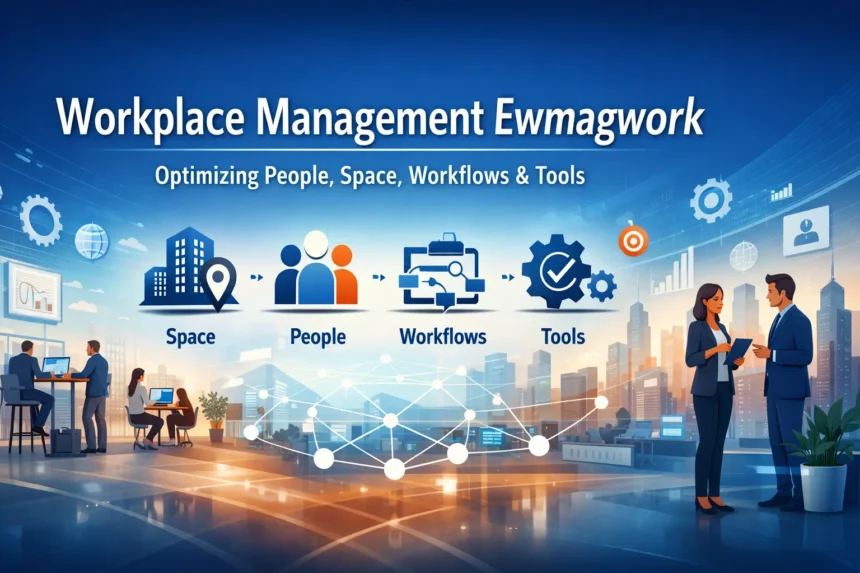
Workplace management ewmagwork is a structured approach to organizing how people work, where they work, and how work flows across an organization. It focuses on improving productivity, employee experience, and operational efficiency by aligning space, roles, processes, and technology.
Traditional workplace management often treats facilities, people, and tools as separate functions. Ewmagwork brings them together into one connected system. The goal is to create a workplace that supports both business outcomes and employee well being.
This approach matters more than ever. Hybrid work is now common. Employees expect flexibility, clarity, and purpose. At the same time, organizations face rising costs and pressure to use office space and resources more efficiently. Ewmagwork helps address these challenges with a modern, data driven framework.
Core Pillars of Workplace Management
Workplace management ewmagwork is built on five core pillars. Each pillar supports the others.
Space and facilities focus on how physical environments are designed and used. This includes desk allocation, meeting rooms, safety, and compliance.
People and roles define who does what. Clear ownership, staffing models, and aligned responsibilities reduce confusion and delays.
Processes and workflows describe how work moves from start to finish. Strong processes reduce waste, rework, and bottlenecks.
Technology and tools enable teams to collaborate, book space, manage assets, and track performance.
Culture and employee experience shape how people feel at work. Communication, trust, and recognition play a major role in long term success.
Ewmagwork Framework Goals Roles and Workflows
Defining Clear Goals
Strong workplace management starts with clear goals. Ewmagwork encourages organizations to translate company strategy into three to five measurable outcomes. These often relate to productivity, cost control, engagement, safety, or service quality.
Goals work best when they are set in short cycles, such as 90 day periods. Agile goal systems like OKRs help teams stay focused and adaptable.
Visibility is critical. Goals should be visible through dashboards, weekly updates, or team stand ups. When people see progress, alignment improves.
Assigning Clear Roles and Ownership
Role clarity is one of the most common gaps in workplace management. Ewmagwork addresses this by defining ownership for key tasks and processes.
RACI style models are useful. They clarify who is responsible, accountable, consulted, and informed. This reduces overlap and prevents tasks from being dropped.
Roles should not be static. As priorities, projects, or team size change, responsibilities must be reviewed and updated.
Optimizing Workflows
Workflows describe how work actually gets done. Ewmagwork starts by mapping current workflows from start to finish. This makes delays, approvals, and information gaps visible.
Once bottlenecks are identified, processes can be standardized using simple tools like checklists, templates, and SOPs.
Common ewmagwork tactics include batching approvals, aligning work into sprints, and reducing context switching. These small changes often lead to large productivity gains.
Read Also: 9054120204 – Who Called Me From This Number?
Space Facilities and Hybrid Work
Space and Facility Management
Space is one of the largest workplace costs. Ewmagwork focuses on using it efficiently and safely.
Key principles include understanding capacity, tracking occupancy, and supporting flexible seating models like hot desking or team neighborhoods.
Safety and compliance are non negotiable. Access control, air quality, cleaning standards, and emergency readiness must be part of daily operations.
Smart office tools such as sensors and booking systems provide real time data on how space is used. This supports better planning and cost control.
Hybrid and Flexible Work Models
Hybrid work is now a core workplace design factor. Ewmagwork treats remote and in office work as connected parts of the same system.
Clear policies are essential. These include desk sharing rules, meeting etiquette, and expectations for asynchronous communication.
Occupancy must be managed fairly. Employees should have equal access to space and resources, regardless of schedule or location.
People Management in Ewmagwork
Workforce Planning and Staffing
Workforce planning connects people with workload. Ewmagwork uses data such as capacity, backlog, and project pipelines to guide staffing decisions.
This helps organizations avoid overwork, underutilization, and last minute hiring. It also strengthens the link between workplace design and workforce management.
Performance Feedback and Development
Ewmagwork favors continuous performance management over annual reviews. Regular check ins, coaching, and real time feedback help teams improve faster.
Performance metrics should align with workplace goals. Examples include OKRs, service levels, customer satisfaction, or utilization.
Training and onboarding are also part of the system. New hires should learn not only their role, but how ewmagwork practices operate day to day.
Employee Experience and Well Being
A well managed workplace supports focus, collaboration, and recovery. Ewmagwork encourages thoughtful design of quiet zones, collaborative areas, and flexible schedules.
Remote and hybrid work can increase stress and isolation. Regular communication, mental health support, and realistic workloads are essential.
Recognition, inclusion, and transparency are key experience drivers. When people feel seen and informed, engagement improves.
Technology Stack for Ewmagwork
Technology enables ewmagwork at scale. Common categories include workplace management software for desk booking, room management, visitor tracking, and analytics.
Collaboration tools support communication, project tracking, and documentation. These tools should reduce friction, not add complexity.
Integration matters. HR, IT, facilities, and workplace systems should connect into a single source of truth.
When selecting tools, ewmagwork emphasizes ease of use, security, integration capability, and scalability.
Data Metrics and KPIs
Data turns workplace management into a measurable discipline.
Space metrics include occupancy rate, peak usage, cost per seat, and meeting room utilization.
People metrics cover engagement, turnover, absenteeism, and productivity indicators.
Workflow metrics track cycle time, throughput, errors, and rework.
Ewmagwork dashboards combine leading indicators, such as capacity trends, with lagging indicators, such as cost or engagement scores. This supports faster and better decisions.
Read Also: 6048521217 – Who Called Me From This Number?
Communication and Change Management
Communication is the backbone of ewmagwork. Common formats include daily or weekly stand ups, retrospectives, town halls, and asynchronous updates.
Change should be managed in steps. Pilots allow teams to test new tools or layouts. Feedback helps refine the approach before scaling.
Resistance is normal. Ewmagwork addresses it through transparency, involvement, and a culture of experimentation.
Implementation Roadmap
Assessment and Strategy
Implementation starts with understanding the current state. This includes space audits, tool reviews, culture surveys, and process mapping.
Initiatives should be prioritized based on impact and effort. Not everything needs to be done at once.
A clear ewmagwork vision and target operating model guide decisions.
Rollout Phases
Phase one focuses on quick wins. Examples include meeting norms, simple workflow changes, and basic desk policies.
Phase two builds the foundation. This often includes workplace software, analytics, and system integration.
Phase three introduces advanced practices such as automation, predictive analytics, and continuous improvement loops.
Governance Risks and Compliance
Strong governance keeps ewmagwork sustainable. This includes clear ownership, escalation paths, and decision rights.
Risks include data privacy issues, security gaps, and change fatigue. These should be monitored and managed actively.
Legal considerations vary by region but often include health and safety, accessibility, and labor regulations.
Sector Specific Use Cases
Technology teams benefit from agile setups and flexible collaboration spaces.
Contact centers require tight scheduling, occupancy control, and environment design that supports focus.
Professional services often need meeting heavy environments and client facing spaces with flexible policies.
FAQs – Workplace Management Ewmagwork
What is workplace management ewmagwork?
A framework that aligns space, people, workflows, and tools to improve efficiency and employee experience.
How is ewmagwork different from traditional workplace management?
It connects goals, roles, and workflows instead of focusing only on office facilities.
Who owns workplace management ewmagwork?
Shared ownership across HR, IT, facilities, operations, and leadership.
Is ewmagwork only for large organizations?
No. It works for small, medium, and large teams.
Does ewmagwork support hybrid work?
Yes. Hybrid and remote work are core parts of the model.
What tools are used in ewmagwork?
Desk booking, collaboration tools, workflow systems, and analytics dashboards.
How long does implementation take?
Quick wins in weeks. Full rollout in three to six months.
What metrics measure ewmagwork success?
Space usage, productivity, engagement, workflow speed, and cost efficiency.
Does ewmagwork improve employee experience?
Yes. It reduces friction, overload, and role confusion.
Is ewmagwork suitable for regulated industries?
Yes, with proper governance and compliance controls.
Conclusion
Workplace management ewmagwork provides a clear, modern way to manage people, space, workflows, and tools together. It helps organizations stay productive, flexible, and people focused in hybrid and changing work environments. When applied correctly, ewmagwork improves efficiency, employee experience, and long term workplace performance.