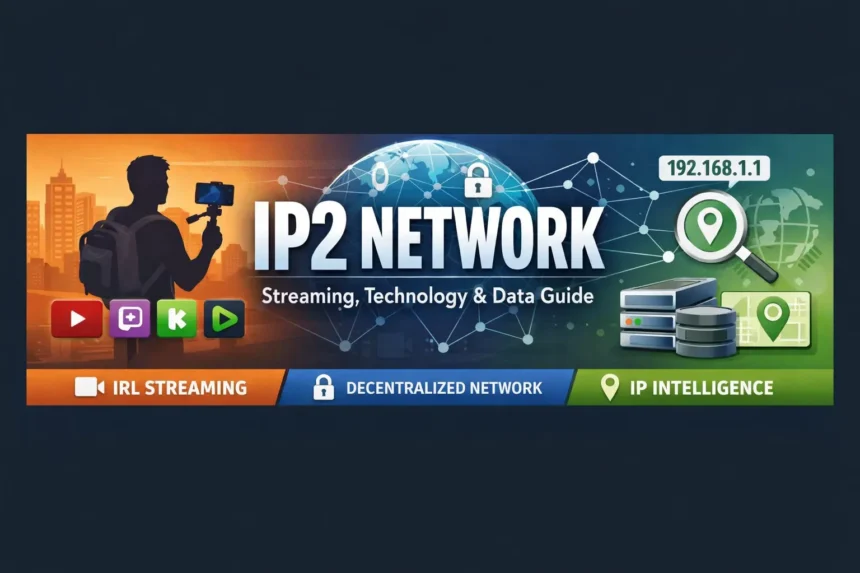
IP2 Network is not a single product or platform. It is a term people use for three different but related concepts:
- an IRL live-streaming community,
- a decentralized, privacy-focused networking concept, and
- An IP intelligence and geolocation data layer used by businesses and developers.
This guide brings all meanings together in one place, so no matter why you searched for “IP2 Network,” you will find a clear, accurate, and up-to-date explanation.
What Is IP2 Network?
IP2 Network in Simple Terms
IP2 Network refers to multiple ecosystems, depending on context:
- A loosely connected IRL streaming community built around independent creators and unfiltered live content.
- A next-generation networking idea focused on decentralization, privacy, encryption, and intelligent routing.
- An IP data layer that maps IP addresses to location and network metadata for fraud prevention, analytics, and access control.
Because different audiences use the same term, this page covers all interpretations clearly and responsibly.
Quick Overview Table (All Meanings)
| Meaning / Context | Core Purpose | Typical Users | Main Platforms / Tools |
|---|---|---|---|
| IRL streaming “IP2 Network.” | Unfiltered live streaming and community-driven content | IRL streamers, viewers, clip communities | YouTube, Twitch, Kick, Rumble, IP2.Network |
| Decentralized IP2 network | Private, censorship-resistant, encrypted traffic | Privacy users, developers, researchers | Custom IP2 clients, peer-to-peer routing concepts |
| IP2 Network (IP data layer) | IP geolocation and intelligence for decisions | Businesses, security teams, adtech | IP data APIs, databases, dashboards |
IP2 Network as an IRL Streaming Community
Origins of the IP2 Network Community
The IP2 streaming scene emerged as a successor culture to earlier IRL movements connected to creators like Ice Poseidon and the CX Network era. As moderation tightened on major platforms, parts of the audience and creators migrated toward independent discovery, clip sharing, and community-run indexes. Over time, “IP2 Network” became shorthand for this decentralized IRL ecosystem rather than a single site.
How the IP2 Streaming Ecosystem Works
Streamers and Content Styles
- IRL streams such as travel, walking streams, lifestyle broadcasts, and spontaneous interactions
- Desktop, gaming, and talk-style streams mixed in
- Heavy reliance on live chat and audience reaction
Platforms and Aggregators
Creators stream on mainstream platforms like YouTube, Twitch, Kick, and Rumble.
Index sites such as IP2.Networks act as directories, linking out to live streams and VODs rather than hosting content themselves.
Community Hubs and Forums
Independent forums and social hubs track:
- Live status and rankings
- Clips and highlights
- Ongoing drama and reputation shifts
These hubs play a major role in visibility and growth.
Culture, Reputation, and Controversies
Community Culture
The IP2 streaming culture values:
- Raw and unfiltered content
- High audience participation
- Fast-moving meme cycles
This openness is a defining trait.
Common Criticisms and Risks
- Platform rule violations and bans
- Harassment and brigading
- Inconsistent moderation standards
These issues explain why IP2 content often remains outside mainstream promotion.
Viewer and Creator Safety
Viewers and creators should:
- Avoid sharing personal details
- Be cautious with links and unofficial mirrors
- Respect platform rules and local laws
How to Watch or Join the IP2 Streaming Scene
For Viewers
- Use known index sites and trusted community links
- Watch directly on official streaming platforms
- Avoid downloads or redirects that request permissions
For New Streamers
- Start on a mainstream platform
- Build consistency and a clear content style
- Follow platform terms to reduce the risk of bans
Read Also: G15tools com contact – Quick Ways to Reach Official Support
IP2 Network as a Decentralized, Privacy-Focused Network
Technical Definition and Core Concepts
In networking discussions, IP2 Network often refers to a next-generation “Internet Protocol 2”-style architecture. The idea is to improve on traditional IP routing through:
- Decentralized peer-to-peer design
- Strong encryption by default
- Hybrid IPv4 and IPv6 compatibility
- Intelligent, adaptive routing
This concept is experimental but influential in privacy-focused research.
Architecture and How It Works
Node-Based Peer-to-Peer Design
Each device acts as a node, reducing reliance on central servers and improving resilience during outages.
Encryption and Privacy
End-to-end encryption ensures data confidentiality, making traffic interception more difficult.
AI-Enhanced Routing and Performance
Adaptive routing logic selects optimal paths in real time to reduce latency and avoid congestion.
Key Benefits and Use Cases
Security and Resilience
- Fewer single points of failure
- Improved resistance to attacks and outages
Privacy and Censorship Resistance
- Reduced dependence on centralized infrastructure
- Better resistance to surveillance and blocking
Business and Developer Use Cases
- Secure remote access
- Experimental distributed applications
- Research into future internet models
How to Set Up and Use an IP2-Style Network
Prerequisites and Requirements
- Supported operating system
- Network permissions
- Basic understanding of networking concepts
High-Level Setup Steps
- Install compatible client software
- Generate cryptographic keys
- Join or create trusted nodes
- Test routing and performance
Common Issues and Troubleshooting
- NAT and firewall conflicts
- Latency due to node distance
- Compatibility with legacy systems
IP2 Network as an IP Intelligence and Geolocation Data Layer
What Is the IP2 Network Data Layer?
In data and security contexts, IP2 Network refers to IP intelligence systems that map IP addresses to structured metadata. This data acts as a foundational layer for digital decision-making.
Data Types and Coverage
Core Data Points
- Country, region, city
- ISP and ASN
- Connection type
- Time zone and language
Update Frequency and Accuracy
High-quality IP data relies on:
- Frequent updates
- Multiple data sources
- Continuous validation
IPv4 and IPv6 Support
Modern IP2-style datasets support both IPv4 and IPv6 for global coverage.
Business Use Cases
Fraud Detection and Risk Scoring
Identifying suspicious traffic, proxy usage, and location mismatches.
Targeted Marketing and Personalization
Delivering location-specific content, language, and offers.
Compliance and Access Control
Supporting geo-fencing, licensing restrictions, and regulatory requirements.
Integration Options and Best Practices
APIs, Databases, and Hybrid Models
Businesses use:
- Real-time APIs
- Local database lookups
- Hybrid approaches for scale
Performance and Caching
Smart caching improves speed and reduces API costs.
Privacy and Data Ethics
IP-based decisions should be transparent, proportionate, and compliant with privacy laws.
Read Also: Is Janitor AI Down? Live Status, Fixes, and Best Alternatives
Tools, Extensions, and Ecosystem Around IP2 Network
IP2.Network Website and Utilities
The IP2.Network site functions as a streaming index, showing live tiles, platform tags, and direct links to creators across multiple platforms.
Browser Extensions and Add-ons
Some extensions offer:
- Quick access to live streams
- Clip creation and sharing tools
Always review permissions and install only from official stores.
Third-Party Services Built on IP2 Concepts
- Privacy and routing services inspired by decentralized networking
- IP intelligence platforms using IP2-style data models
FAQs About IP2 Network
Is IP2 Network a streaming site, a protocol, or a data service?
It is all three, depending on context. The term is used for an IRL streaming community, a decentralized networking concept, and IP intelligence data systems.
Is the IP2 streaming community legal and safe to watch?
Watching streams is generally legal, but content may violate platform rules. Safety depends on the creator, platform, and viewer behavior.
How is an IP2-style network different from a VPN or proxy?
It focuses on decentralization and adaptive routing, not just tunneling traffic through a single provider.
How accurate is IP2 network IP geolocation data?
Accuracy depends on update frequency and sources. High-quality datasets are reliable for country and region-level decisions.
Can anyone build on IP2 network technologies?
Yes. Developers, businesses, and creators can participate if they meet technical, legal, and platform requirements.
Conclusion
IP2 Network is best understood as a multi-meaning umbrella term. It represents a streaming culture, a networking vision, and a data foundation. Treating it as a hub topic with clear silos allows users, creators, and businesses to find exactly what they need without confusion.